

Leadership Initiative
Explores
to Thrive
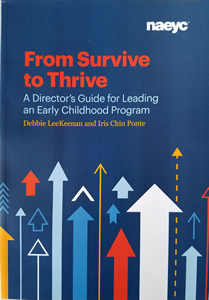
The Leadership Initiative hosted a series of activities, events and discussions around the National Association for the Education of Young Children's publication for leaders, From Survive to Thrive: A Director's Guide for Leading an Early Childhood Program . These resources are from the 2020-21 series.
New York City
Regional initiatives
Each region hosted its own set of webinars, discussions and activities around the themes of From Survive to Thrive. Click below to explore your region's initiative and get involved in the conversation.
Webinar Launch Video
Webinar Series
Please see below for recordings, resources and reflections from our webinar series.
Survive to Thrive Chapter 1: What Does It Mean to Be a Director?
Wednesday, January 8th at 2:00pm
Survive to Thrive Chapter 2: Program Context and Culture
Wednesday, February 5th at 2:00pm
Survive to Thrive Chapter 2: Program Context and Culture
Survive to Thrive Chapter 3: Achieving and Maintaining Program Quality
Wednesday, March 11th at 2:00pm
Survive to Thrive Chapter 3: Achieving and Maintaining Program Quality
Survive to Thrive Chapter 4: Budget and Finances
Survive to Thrive Chapter 5: Program Curriculum
Wednesday, May 6th at 2:00pm
We apologize for the audio difficulties during slide "How Do Teachers Document Their Implementation" (min 35:00 in the recording). Here is the audio content that accompanied that slide:
"Now let's take a look at how teachers document their curriculum for you & others, for families, and for children.
Making curriculum implementation visible and accessible impacts your program on many levels.
As the director you need to be able to monitor and ensure the curriculum is being implemented properly and as planned.
You might require teachers to keep their weekly lesson plans and notes in a binder in their individual classrooms to make it easier for you to review what is happening and provide feedback during your classroom visits.
Alternately, you might create an electronic template for teachers to submit to you via e-mail each week, or have teachers bring their lesson plans to their supervision meeting with you to review and discuss their plans in person.
Providing families with curriculum information not only validates this choice they made in your school as an investment in their child's development but can help with continuity of learning extended into children's homes.
Many programs provide guidelines for teachers about sharing with families what their children are doing and learning in the classroom, including the frequency and structure of the communication. It is extremely helpful to provide templates or examples for teachers to better understand your expectations.
Some families may come to you or to their teachers with concerns about whether children are being adequately prepared for academically; work with your staff to increase their effectiveness at communicating the value of your curriculum.
And finally, documenting and sharing with children helps them to develop confidence and pride, and connect their learning.
Documentation of children's work may include photographs, work samples, or dictations of what children have experienced helping to make children's learning visible to them and their families.
Make documentation a celebration! It is ultimately the opportunity for teachers to display and share their hard work and the impact it is having on children's learning and development."
Survive to Thrive Chapter 5: Program Curriculum
Survive to Thrive Chapter 6: Observation, Assessment, and Documentation
Wednesday, June 10th at 2:00pm